
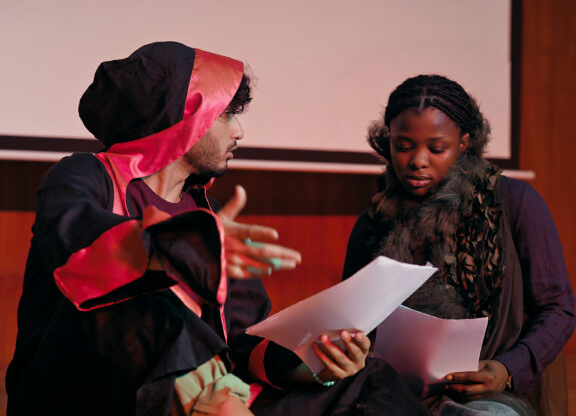
Collaborative storytelling is more than a creative outlet. It is a living example of how performance and theater can build empathy, soften stigma, and connect people across the divides of their own experience.
When people come together to share stories about mental illness, something quietly powerful happens. Struggles that are usually hidden, complicated, or hard to speak aloud become human and visible. And the people listening don’t just hear a position they can argue with—they meet a person.
That’s the heart of what storytelling-based theater does. It lets us safely step into lived experiences different from our own.
Consider True Story Theater, an interactive ensemble in Arlington, Massachusetts, and a longtime grantee of the National Endowment for the Arts. Audience members share real moments from their lives, and actors reflect those stories back on the spot. The company’s program manager describes the form simply: it’s like an embodied empathy. Their founding director puts it another way—when you hear someone’s actual story rather than a talking point, it hits home, and afterward people feel connected to others whose lives look nothing like their own.
And the impact reaches into the hardest places.
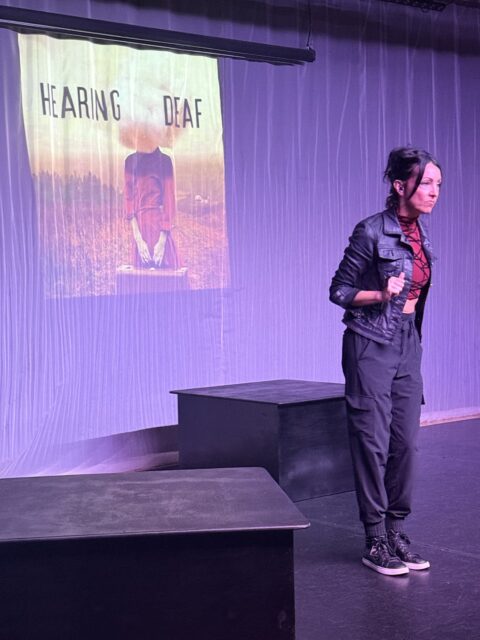
When True Story Theater performed shows exploring visible and invisible disability, participants shared stories about the stigma surrounding mental health—the kinds of struggles that often feel too embarrassing to say out loud. By honoring those experiences on stage, and reflecting back not just the pain but people’s strength and resourcefulness, the work gave audiences compassion for what people living with mental illness move through every day. That is stigma loosening in real time, one story at a time.
When a Story Becomes a Bridge
Researchers studying mental health have found that sharing lived experience does real work. When people tell their stories in a supportive setting, those individual struggles become shared, recognizable human experiences—which deepens empathy and helps reduce stigma. Hearing one another’s stories, studies note, normalizes distress and builds genuine empathic connection.
The broader picture points the same way. The National Endowment for the Arts, drawing on years of research at the intersection of creativity and health, notes that arts engagement can help people cope with difficult feelings, bounce back from adversity, and show tolerance and compassion for others. Creative expression, it turns out, is one of the ways communities learn to hold space for one another.
The Quiet Power of Being Heard
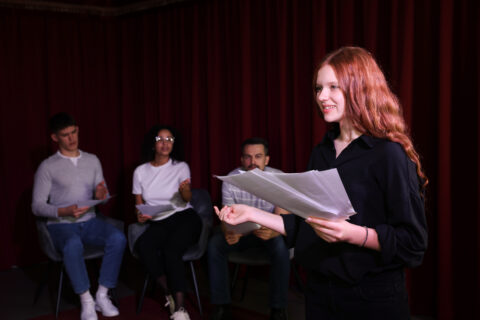
When someone shares a story and then sees it honored—watched, reflected, taken seriously—the sense of isolation starts to lift. People feel heard, sometimes for the first time. At a True Story Theater performance, after one person shared a painful moment, the actors asked the room, “Who else here has experienced something like that?” And the person who had just felt so alone looked around and saw how many other hands went up. That is what narrative art makes possible. It transforms private struggle into shared humanity, and it turns an audience of strangers into a community of people willing to understand one another.
Just as importantly, storytelling reframes how we talk about mental health. Instead of a conversation hidden behind closed doors, it brings mental health into a shared, creative space, one associated with empathy, expression, and connection rather than shame.
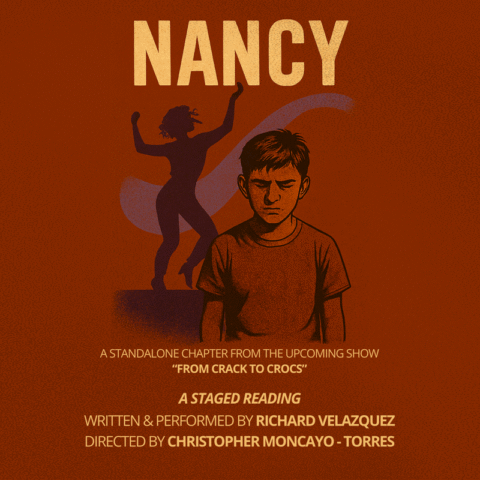
We are seeing this right here in Ventura County, through the VibeWell project. Venues like NAMBA in Ventura are using narrative-based programs to share peoples’ stories to reduce stigma surrounding mental health, living with disabilities, and simply being different from the “norm”. We’ve been honored to work with them both as a VibeWell grantee where they presented “Nancy”, 40-minute solo performance by Richard Velazquez — a first-generation Latinx man telling the truth about a Puerto Rican childhood, a step-sister who taught him to dance, and everything that came between them; and, directly in co-producing Every Body, Every Mind, which featured narrative one person shows from TL Forsberg and Diana Romero, with some comedy from Nic Novicki.
Bottom line: the arts connect us, they help us understand one another, and perhaps most importantly, it increases our ability to care for one another.
Why Creativity Belongs in the Conversation
At VibeWell Ventura County, we believe creativity is not separate from wellness. Creativity is wellness. Whether someone stepped onto a stage, shared a personal story, or simply sat in the audience and raised their hand, performance reminds us that healing and connection can happen in public, together, and in ways that are visible to everyone.
VibeWell Ventura County is funded through Ventura County Behavioral Health, Mental Health Services Act.
Want to learn more? Read about True Story Theater’s storytelling work through the National Endowment for the Arts, explore the NEA’s Arts and Health research, or read the study on sharing lived experience and empathy in mental health settings.
To explore arts-in-health programs near you, visit our resources page.